
Gallows Humor

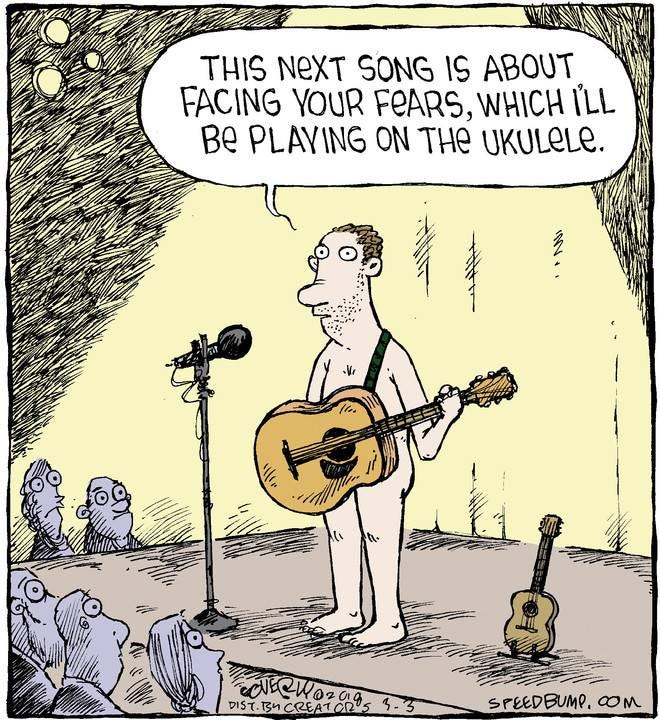
I recently spoke at the Morris M. Goldberg Symposium on humor in medical care at Lutheran General Hospital near Chicago. I had a great time presenting and listening to the other speakers and audience members. One of the topics that came up, that the speakers agreed to address in some meaningful way, was the idea of gallows humor, or dark humor. With the way our society is at the moment, it’s often hard to talk about gallows humor because it often relies on content that can be seen as offensive or hurtful. Supervisors wince at the thought of even talking about it and let’s not even imagine the horror such talk brings to the minds of our human resources folks who can only imagine the bevy of complaints received if people caught wind of certain tidbits of dark humor
.
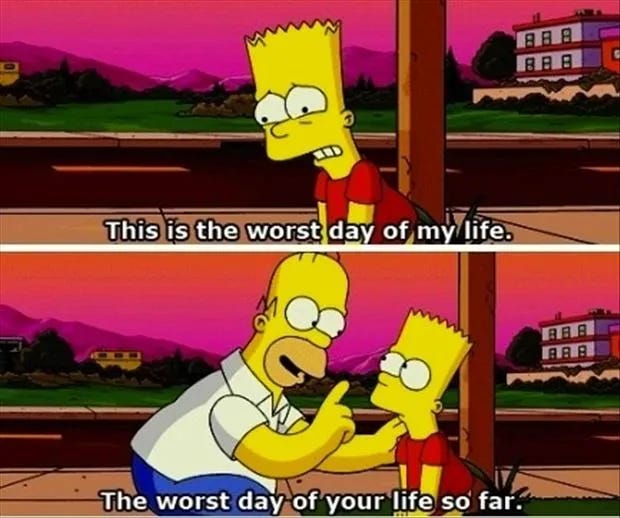
Writers, thinkers, comedians, and even lowly philosophy professors, have all thought about the value of dark or gallows humor. The famous psychologist, Viktor Frankl opined that “Humor was another of the soul's weapons in the fight for self-preservation.” Comedian Joan Rivers, in commenting on the suicide of her husband, said “If you can laugh at it, you can deal with it.” Perhaps my favorite comes from Mark Twain who notes that “The Human race has only one really effective weapon, and that is laughter.” It’s not too much to say that humor, humor in the darkest of times, humor about those dark happenings, those events and calamities that can bring us to our lowest point, is a crucial aspect of our lives. Indeed, Homer Simpson reminds his son Bart. “It’s the worst day of your life so far.
”
One of the points I made in my brief discussion of gallows humor focused mostly on what we see in the above quotes. No matter how hard life gets, no matter how low we may feel, whatever the situation, if we are able to find ways to laugh about it, laugh at it, make light of it, we are far better off than if we can’t. When we’ve reached a point when we cannot find a way to laugh at the situation, we’re in deep trouble. Laughter and humor are those last parts of us, of who we are, that can punch back (metaphorically of course) when even are hands are bound. When we are in spaces where the light is absent. In those times when we create and use laughter, we bring our own light, we bring ourselves out of the bounded physical and into the unbounded world of laughter, levity, and light. And when and if we can share this with others, we share that light, that levity with others it is such a powerful force. This is why we see humor brightening the dark spaces of places like concentration camps, prisons, and others.
Sure there is much to say about what’s appropriate and how, in places when we’re not alone and we’ve others with different backgrounds and sensibilities, how we are to understand how to navigate, but that’s for a different post. For now, remember what Frankl, Rivers, and Twain tell us. Laughter is that one tool that we can rely on when all else seems lost.